
Prince Rogers Nelson biography
Chapter 1: Let’s Work
By Goldies Parade
A bemused Oprah Winfrey asked Prince in 1996 why he, an international superstar, still chose to live in Minnesota “of all places”. He responded simply, “I will always live in Minneapolis. It’s so cold it keeps the bad people out.”
Minneapolis was Prince’s home city since birth and indeed remained his base throughout the height and length of his career that ultimately spanned four decades. The place greatly influenced Prince’s music. Lying at the far north of the US on its border with Canada, winters in the state of Minnesota indeed average lows of -14C. The interwar period saw approximately two million blacks flee America’s southern states to seek refuge from racism in what experienced the country’s largest internal migration in its history. They were headed north in search of tolerant society and for skilled and better paid work. A mere 4,646 made their way to Minneapolis by 1940, a figure doubtlessly low due to its uninviting winters.
Prince Rogers Nelson was born at the city’s Mount Sinai Hospital on 7th June 1958. His father, John Lewis Nelson (1916-2001) a pianist hailing from Louisiana, named Prince after his band – New Orleans jazz outfit Prince Rogers Trio (incidentally a four-piece ensemble). His wife and Prince’s mother Mattie Della Shaw (1933-2002) was the band’s singer. John and Mattie married on 31 August 1957 and joined the exodus north. They headed to Minneapolis, a city that adjoined the state capital St Paul and together was known as The Twin Cities. Despite choosing to live in the city where the black community represented just one percent of the population, Minneapolis enjoyed a reputation for racial tolerance, owing to its particularly large Scandinavian community drawn there by the cold familiarity of home. The black population was concentrated in the north of the city, where in December 1958 John and Mattie bought a house at 915 Logan Avenue North. Prince’s only full sibling, his sister Tika (‘Tyka’) Evene, was born on 18 May 1960 (she died of heart complications on 4 November 2024). John’s first marriage to Vivianne Howard Nelson (b 1920) produced Prince five elder half siblings: Sharon Nelson (b. 1940), Norrine Nelson (b. 1941), Lorna Nelson (1943-2006), John R. Nelson (b. 1944) and Duane Nelson (1958-2011). To them and school friends, Prince was known as Skipper. Duane and Prince became best friends, and would one day be put on the payroll to head Prince’s security. Despite its tolerance, racial segregation was very much in existence in Minnesota. Up to 1967, along with the other black kids, Prince had to sit at the back of the bus on his rides to school.
I named my son Prince because I wanted him to do everything I wanted to do.
John L. Nelson
The failure of the Nelsons’ jazz trio in 1960 sparked the deterioration of John and Mattie’s relationship and in 1965 the couple separated, when John moved out of the family home to take up residency of his own apartment. Mattie remarried in 1967, to Haywood Baker, and in 1970 they had a son Omarr Baker. By day, Prince’s biological father was a plastics worker at the city’s Honeywell factory but at night played shows throughout the jazz clubs and strip bars of Minneapolis. The music scene was focussed in an area known as Uptown, the city’s nightlife and bohemian district. Prince often accompanied his father to the shows, standing in the wings studying his father’s performance. Prince was also a keen and proficient basketball player, but due to his 5ft 2in frame ambitions being drafted to a major league team were never going to be realised and so absorbed himself into music. Prince’s father became a significant influence on his early career. In later years, Prince shared writing credit with John, in part to give his father financial help from the royalties. Music education was compulsory in Minnesota, and although Prince was unable to read music, as a way to escape his troubles at home spent hours teaching himself any instrument he could get his hands on – starting with the piano left behind by his father and learned to play theme tunes to his favourite TV shows, such as Batman. Before long, Prince composed his first song, one that would encapsulate his coming career: Funk Machine.
By 1970, tensions living with his stepfather resulted with Prince running away from his mother’s home aged 12 to live with his aged aunt Olivia Lewis, at 3837 South 4th Avenue. Unable to house the piano, Prince took up learning the electric guitar, to the chagrin of his aunt who could not tolerate the noise. In 1972 Prince moved into his father’s new house at 539 North Newton Avenue in north Minneapolis. In 7th grade at Bryant Junior High, Prince meets André Simon Anderson, and sharing a love for music they became inseparable friends. As Prince’s relationship with his father deteriorated, and knowing he was in need of a new home, Anderson asked his mother, Bernadette, if Prince could live with them. Bernadette Anderson, a community social worker with six children of her own, took Prince in and set up a room in her basement, 1244 Russell Avenue South. Prince and André jammed for countless hours in that basement and in 1973 they formed a funk band Grand Central, named after their high school – André Simon styling his stage name André Cymone.
The band comprised of Prince on keyboards and guitar, André on bass, and Prince’s second cousin Charles Smith on the drums. Soon, the lineup expanded to involve Linda Anderson, André’s elder sister (keyboards), the Anderson’s neighbour Terry Jackson, and William Daugherty (percussion). Grand Central performed covers of their favourite funk tunes of the day; always performing them as instrumentals no singer was necessary. Daugherty’s cousin Morris Day, who had struck up a friendship with Cymone, was bought into the band in 1975 in substitute of Charles Smith as drummer. Day’s mother Lavonne Daugherty was the band’s designated manager and in 1976 renamed it Grand Central Corporation. The group was again renamed to Champagne shortly before their graduation from Central High that June – Prince declaring his occupation in his final yearbook as ‘Musician’. Indeed, on 4 December 1975 Prince and André promptly gained employment as session musicians, stepping into their first professional recording studio, Cookhouse Studio in south Minneapolis, laying down instrumentals for a local musician Pepé Willie’s newly formed funk band 94 East. Pepé, an introduction brokered by Lavonne, and since 1974 husband of Prince’s cousin Shantel Manderville, named his band after the nearby Interstate 94, which since 1964 linked St Paul and Minneapolis with Chicago to the east. Pepé took to mentoring Prince in the art of songcraft and the workings of the music industry.
During 1976, 21-year-old British expat, record producer and lyricist Chris Moon was seeking a piano player for a track he was needing to record and phoned a local band named Champagne. Moon was proprietor of a $35 an hour studio on the edge of Minneapolis, named Moon Sound Studios. When Prince started playing, Moon was amazed by the 17-year-old’s musical prowess, being able to play far more than piano but also synthesisers, drums, electric guitar and bass all to impressively high standards. Moon offered Prince free use of his studio and taught him how to work its 16-track recording console and persuaded him to sing rather than just play instrumentals. Prince quit Champagne to spend the summer with Moon, collaborating on writing and recording tracks – Moon creating the lyrics and Prince the music; one of these songs was Soft And Wet. When Moon played it to Owen Husney, head of a local music management firm named American Artists, Husney was shocked to learn the ‘band’ he thought he heard was just one kid playing every instrument. Realising Prince’s potential, he booked studio time with an experienced local sound engineer David Rivkin, to join him at Sound 80 in downtown Minneapolis to lay down a demo reel. Husney designed a simple press kit headed simply ‘Prince’ – no surname, and gave little biographical information. Prince’s talent would do the talking.
Armed with fifteen press kits and demo reel in hand, Prince and Husney flew over to LA to doorstep the major record labels. Husney shopped the tape across his industry contacts, and whilst receiving rejections from ABC and RSO, the tape gained interest from three labels: A&M Records, Columbia CBS, and Warner Bros Records. Yet Prince was not going to accept just any deal. He would only sign with the label that would grant him full creative control in the studio. The meeting Husney secured at Warner was with their VP in charge of promotion, Russ Thyret. Although. A long-established record label whose flagship band at the time was Fleetwood Mac, Warner was not known to sign black artists. The 1970s was still in the era when black music was relegated to its own Billboard list, which would continue until October 1990 when renamed R&B albeit to acknowledge the influence of hip hop. Prince was impressed how Warner’s chairman Mo Ostin (who had previously signed Lennon, Hendrix and Fleetwood Mac) promoted a culture of nurturing artists. And once its head of A&R, Lenny Waronker, was so taken with Prince’s abilities following a brief studio test he was happy to allow Prince to produce the record. Seeing the star quality and talent Prince was, plus the overtures A&M and Columba were also making to tempt him to sign, Thyret took it as his mission to convince Prince that Warner was the label best suited to him. The deal was struck.

The contract was signed on 25 June 1977 and presented Prince at the tender age of 17 a cheque for $80,000 to deliver three-albums. Their US distribution would be handled directly by Warner, and overseas by their branches under WEA International (formed by the merger of Warner, Elektra Record and Atlantic Records in 1969). The label also offered Prince Earth, Wind & Fire’s producer, Maurice White, with whom to produce the debut album but the young artist declined. Not wanting their sound to work its way into his record, Prince was determined his LP would be all his own creation. The signing saw Prince become the youngest record producer working in the industry. That August, Prince and Husney headed to Sausalito near San Francisco, to Record Plant, the very studio Fleetwood Mac laid down Rumours the previous year. Here Prince set to work with sound technician Tommy Vicari in a gruelling schedule to record tracks for his debut album. The sessions were booked to last one month but ballooned into three as Prince sought to throw in everything he could to perfect his record, causing the working relationship with Vicari to become strained. It was here Prince was introduced to his key musical influence – Sly, of The Family Stone. Armed with a cache of twenty songs from his Sound 80 sessions, Prince whittled them down to ten and rerecorded these at Sausalito, nine making the cut for his debut record For You. The album came out on 7th April 1978 and debuted in the Billboard album chart on 28 October, landing at number 138. Uniquely, every track on the LP was not only produced by, but arranged, composed and, playing all of its 27 instruments, performed entirely by Prince himself. When asked why he did everything himself, Prince, who was no talker, responded that it was just simpler than articulating to others what he wanted. It would establish the hallmark which would define the course of this budding prodigy’s stellar career.
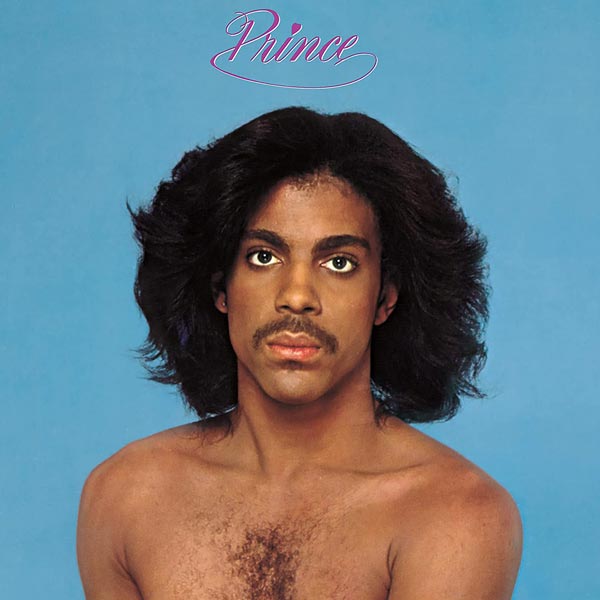
The debut album’s lead single Soft And Wet met moderate success, peaking at number 12 on Billboard’s soul chart. A backing band was assembled to perform with Prince in the live shows for a supporting tour. André was enlisted on bass, and was joined by Bobby “Z” Rivkin – brother and studio runner for sound technician David Rivkin at Moon Sound – to play drums. Responding to an ad Prince placed in The Twin Cities Reader and unglamorously auditioned behind Del’s Tire Mart, 18-year-old local musician Dez Dickerson was signed on for rhythm guitar. Gayle Chapman, hired after reaching out to Prince for an audition, and Matt Fink (introduced to Prince by friend Bobby Z) both joined on keyboards. This arrangement of double keyboards, substituting horns with the second synthesiser, would form the basis of Prince’s unique sound. Furthermore, from the outset Prince was intent to enlist white members to his band, drawing inspiration from Sly & The Family Stone. His backing band was also to receive a name, The Rebels, and they headed to Colorado in July 1979 to create tracks for their own album. Although Warner felt this was a distraction and the act continued under the name ‘Prince’, it sowed in him an ambition to create a named backing band in the future.
The group staged their first public gigs at the Capri Theatre 5th and 6th January 1979, playing to just 300. The first show was for the general public, but attendees to the crucial second show included Warner’s management. While the performance was good, they considered the band were not yet polished enough to go on the road. The debut album thereby passed unsupported. Frustrated how the studio time had overrun to produce For You and had all but blown the entire budget allocated to create all three albums, Warner believed Prince needed the steady stewardship from more experienced management. The management team they introduced Prince was the Hollywood firm responsible for propelling Earth, Wind & Fire to stardom in the early 1970s: Bob Cavallo, Joe Ruffalo and Steve Fargnoli. Husney was sacked and replaced with Fargnoli, who in April 1979 sent Prince to Alpha Studios in Burbank, California to work alongside Gary Brandt to record the second album. Having wanted to try every trick in the book in exhausting studio sessions laying down For You, Brandt reined Prince back and introduced him the nuances of recording. The result was a sharper, cleaner LP. And as if to relaunch him as a more refined artist, Prince’s second album was self-titled Prince and was released that August. By December it had delivered a 141 position improvement in the album chart. Its lead single I Wanna Be Your Lover also secured Prince’s his first hit, topping the Billboard Hot Soul Singles and peaked at 11 on the main Hot 100. Its lyrics proclaimed Prince’s affection for LA jazz keyboardist Patrice Rushen. In February 1980, Prince record secured Prince his first Platinum certification with The Recording Industry Association of America (RIAA).
Prince and the band finally embarked on their debut tour on 26 November 1979, a headlining act on the club circuit in promotion for the Prince LP. Just six shows in, Prince was struck down with pneumonia and the remainder of the tour was postponed to the next year. Yet its brief run led to his first television performance – the popular ABC show American Bandstand, which aired on 26 January 1980. Sadly his appearance on the show was a disaster and humiliating experience. American Bandstand was a long-running TV staple that had introduced the likes of Michael Jackson, Aerosmith and Sonny & Cher. The show was taped in Hollywood on 16 December 1979 while Prince was still recovering his health. Following Prince’s confident performance of I Wanna Be Your Lover, stage fright had him clam up when interviewed by its host Dick Clark. From that moment on Prince only gave interviews in settings he controlled and in doing so laid the foundations of the mystique he would let foster throughout his career. The tour resumed in February 1980 and as this evolved it culminated with Prince joining Rick James for nine weeks as support act in James’ Fire It Up Tour. The stint would not only give Prince greater exposure playing to larger arenas, James’ act became formative to the characteristics Prince took for his own live show. A rivalry ensued and the billing became known in the music press as ‘The Battle of Funk’.
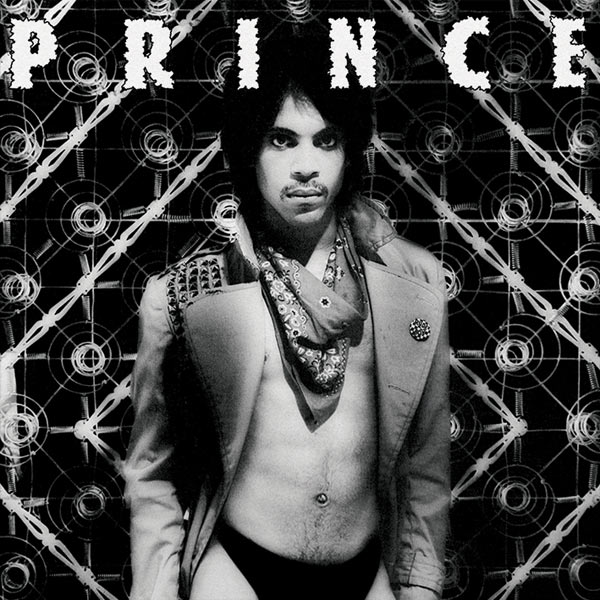
In 1980, Prince had earned enough money to purchase his first home, a ranch on Kiowa Trail in Chanhassen a secluded district in the far outskirts of Minneapolis. While awaiting his home studio to be fitted out, that May Prince set to recording his third album Dirty Mind in the leaky basement of his rented home at 680 North Arm Drive perched on the northern shore of Lake Minnetonka. He would name this home studio Uptown and outputted a string of tracks for which became his first LP produced in Minnesota, gave rise to the ‘Minneapolis sound’ that would show Prince at his most authentic and define the remainder of his career. Determined to ensure he would not be judged as just another R&B act, come his third record Prince switched up his image to step out of the underground music scene, he intended to shock his way into the mainstream.
Deeply rooted in funk and shamelessly hedonistic, the ‘revolutionary rock and roll’ Dirty Mind album dropped on 8 October 1980 and propelled Prince into the public glare. Dirty Mind peaked in the Billboard 200 at number 45. Out went the disco afro and in came a trench coat and neckerchief in a makeover showing that Prince was no ordinary funkster. The content was not to everyone’s taste. That September, Gayle Chapman was replaced following a successful audition with Lisa Coleman. Chapman, a devout Christian, quit the band over a moral conflict with Prince who wanted her to sing the highly provocative lyrics of Head for the album’s upcoming promotional tour. Coleman, introduced to Prince by Steve Fargnoli, was a classically trained pianist from LA and would become an influence in Prince’s later creative direction. The Dirty Mind Tour pressed ahead that December and this time Prince was touring theatres as the headlining act. The shows took Prince to Europe for the first time, where it was well received. Filling 1,000 capacity venues back home, Prince was getting noticed, even catching the attention of Mick Jagger. Shortly after Dirty Mind Tour wrapped in the summer of 1981, Jagger booked Prince as support (albeit lowest on the bill) for The Rolling Stones to play their two Los Angeles dates at 9 and 11 October at the Memorial Coliseum, before 94,000 attendees nightly. The shows fortuitously coincide with the release of Prince’s fourth LP Controversy, however the biker-rock audience did not take warmly to Prince’s music and avant-garde punk getup. After performing just four songs in his set, deluged with food thrown stage-ward, Prince and his band were unceremoniously booed off. Distressed, Prince flew straight back to Minneapolis, leaving Jagger himself to convince him back to play the second date. Come 11 October, this time after just two songs, Jack U Off and Uptown, the band was again forced from the stage early. One newspaper article remarked “rock n rollers pay to see white performers,” yet the incidents would spur Prince and he was about to become one of the most famous performers on the planet.

After that inauspicious end to the tour, Prince moved into the ranch at 9401 Kiowa Trail. He had it painted purple and converted its ground floor family room into a fully fitted out studio. He set to work to record the debut album for Morris Day, who was fronting Prince’s first spin-off act The Time. Despite his youth, Prince had demanded a clause written into his contract with Warner Brothers to allow him sign and produce other artists to their label. The spin-off projects created additional outlets for Prince to release his already growing stockpile of songs which had grown so broad branched out to different styles. Prince’s involvement with Day’s record was credited under the pseudonym Jamie Starr, a precautionary measure to shield Prince’s own career should that side project fail. It was a poorly kept secret and Prince would do this many times over with other artists, adopting several alter-egos to hide himself from projects. But a common theme would soon emerge, under these side projects Prince demanded total creative control of the output. Feeling restricted and wishing to pursue a career of his own making, Andre Cymone had quit Prince’s band straight after Dirty Mind Tour to pursue a solo career. Local bassist Mark Brown (Prince stage naming him BrownMark) was hastily hired in replacement of Cymone to play the Rolling Stones gigs.
Despite rave reviews of his music, Prince was still searching for his commercial breakthrough. Warner Brothers too believed Prince was at the verge of fulfilling his dream and the two renewed their contract. Prince’s first solo project laid down at his Kiowa Trail home studio was titled Controversy. Intent to present himself as a serious artist, Controversy was also his first record to tackle the key social issues of the day, particularly gun violence, and for the first time combined sex and God into popular music – determined to have this album live up to its name. Although it became his first LP to break into the US top 40 (number 21) Controversy did not land the hoped major breakthrough to the white mainstream. Critics branded it disjointed, in being lewd on the one hand while on the other presenting Prince as a politically conscious artist. Morris Day and The Time opened for Prince for the supporting Controversy Tour, which played 55 shows nationwide. While on the road, Prince wrote material for the second album for The Time as well as a new side project, a girl trio named The Hookers, which evolved into Vanity 6 after its newly enlisted lead singer Denise “Vanity” Matthews. With their opening set proving as popular as Prince’s main act, his frustration with The Time peaked with a physical altercation at the hotel room on the final show of the tour on 14 March 1982.
Until 1983, Prince was considered too daring to be taken seriously outside of the music press, but this changed on 28 April when he was the cover feature in Rolling Stone magazine, pictured with Vanity and caught the notice of the wider media. With four solo albums under his belt and a growing stable of satellite acts, Prince established a publishing entity Controversy Music to manage the rights to his music and became a member of ASCAP. Indeed, 1982 proved to be a prolific year for Prince, producing a wealth of material at his Kiowa Trail home studio, spurred by the revolutionary Linn LM-1 drum machine he recently acquired. The tracks got longer, many clearing six minutes, and laden with catchy hooks and fills it was the sound of the future and the world needed to hear it.
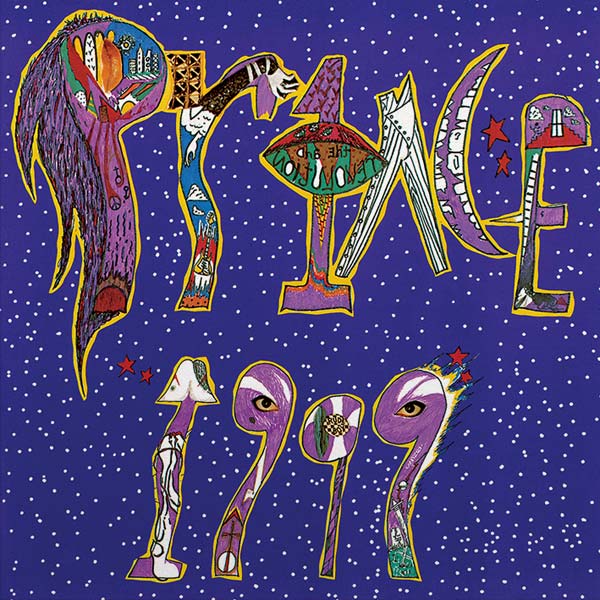
The release of Prince’s fifth album 1999 met a happy coincidence with the launch of MTV on 1 August 1981. Although the new channel was initially resistant to play black artists, on 16 December 1982 the album’s title track 1999 was included in its select few singles aired in heavy rotation. Little Red Corvette joined this list the following February and on 21 May 1983 the track became Prince’s first bona-fide hit by breaking into the Billboard top ten (#6). The song helped the LP sell four million copies in the US and peak in the album chart at number 9, scoring Prince his long-awaited commercial breakthrough. The resulting tour in which Prince was again supported by The Time and now Vanity 6, duly billed as the Triple Threat Tour, was a resounding success and saw its run extended thanks to the soaring popularity of Little Red Corvette. The tour grossed a respectable $10 million and filled its schedule of arenas at 20,000 capacity. The album, Prince’s first double LP, stayed in the chart for 153 weeks and ultimately became the second most successful album in his forty year career.
On record, Prince showed no aversion to use the F-word casually in mainstream music. Swearwords and his fearlessly lewd lyrics became a hallmark that would stand Prince out to good advantage. Yet 1999 was deemed as too much product to introduce him to the UK and was pared down to a single LP, mercifully subsequent pressings restored the second disc. 1999 became hugely influential on electro-pop and defined the course of music throughout the remainder of the 1980s and for decades beyond. Not only did it put Prince on the cover of the coveted Rolling Stone magazine, his musical impact saw him compared alongside Michael Jackson as the first artists to truly crossover from black music and stride deep into the white mainstream. Prince later resented comparison with Jackson and a rivalry between them ensued. Feeling impinged by Prince’s control in the studio, Dickerson quit the band following 1999 Tour’s conclusion in April 1983. Dickerson’s exit spurred Prince to double down on keeping momentum. Guitarist Wendy Melvoin, introduced to Prince by her childhood friend Lisa Coleman, was hired in replacement of Dickerson. The refreshed backing band even received a name, The Revolution. Superstardom was on the horizon.
Chapter 2: Starr Power
Accompanied by his new band The Revolution with whom and for the first time Prince uncharacteristically shared creative input in the studio, work was begun on his sixth studio album Purple Rain. Recording got underway in August 1983 and during this, Prince found time to also write a second album for Vanity. But when its then lead vocalist, former model and then girlfriend of Prince, Vanity Matthews quit, the group assumed the name Apollonia 6 after her replacement, 22-year-old Mexican actress and singer Patrica “Apollonia” Kotero.
Prince may be the unlikeliest rock star in recent memory – but a star he definitely is.
Bill Adler, New York Times
Prince’s breakthrough with 1999 arrived at a timely moment – his upcoming contract renewal with Warner. Prince’s desire to make a concert movie with a backstory that charted his life, started during Controversy Tour. Plans for a movie titled The Second Coming failed to come to fruition but its concept was taken more seriously when Prince shot to fame with his first multi-Platinum certified LP. He told Fargnoli he would not sign the contract extension with Warner unless they green light a feature movie.
Plans for the motion picture took flight during Triple Threat Tour in early 1983, in what was a huge success staging near to ninety arena shows. Prince’s manager Bob Cavallo began touting the star to Hollywood, but with only two hit singles to his name, after some persuasion and the threat Prince would not extend his contract otherwise, Warner Pictures agreed to finance a $7 million movie that documented the backstory to Prince’s troubled upbringing and emergence in the Minneapolis music scene. The film would be very much based in fact but not without dramatic embellishment. The narrative of the story would recount his increasing insecurity performing alongside The Time who shared the same bill during the 1999 tour. Initially titled Dreams, the project was soon renamed Purple Rain. Creator and scriptwriter of hit TV shows Fame and Starsky & Hutch, William Blinn, was brought onboard to contrive a story that charted Prince’s struggles, who would play the lead character The Kid. The female lead and Prince’s love-interest in the movie would be played by Kotero.
Writer-Director, Albert Magnoli, then fresh out of university and just one movie short to his name, accepted the project albeit after some convincing. He spent the next four weeks rewriting much of the screenplay to give it grittier edge. The Revolution was likewise cast to play Prince’s bandmates in the movie. The Time, as well as many of Prince’s real-life acquaintances also received starring roles, indeed only two professional actors appeared in the whole movie – playing Prince’s on-screen parents. The band took their acting lessons during preproduction which began on 15 September 1983, followed by ten weeks of filming starting from 1 November. Shot at various locations throughout Minneapolis, production moved to Los Angeles to escape the harsh Minnesota winter and wrapped in March 1984. It was shot at locations important in Prince’s early career, principally First Avenue the nightclub Prince often played and honed his live act since 1980 when the venue was known as Sam’s.
The soundtrack accompanying the movie Purple Rain was recorded live at this same venue as well as a local warehouse and at Prince’s home studio on Kiowa Trail. Prince was delighted with the material for the new album, and his writing became ever more prolific; penning at this time hits like Sugar Walls for Sheena Easton – concealed under the name of Alexander Nevermind; Manic Monday for Apollonia, which he instead gave to The Bangles; and Nothing Compares 2 U which he later famously passed to Sinead O’Connor in 1990 and became the year’s most successful song.
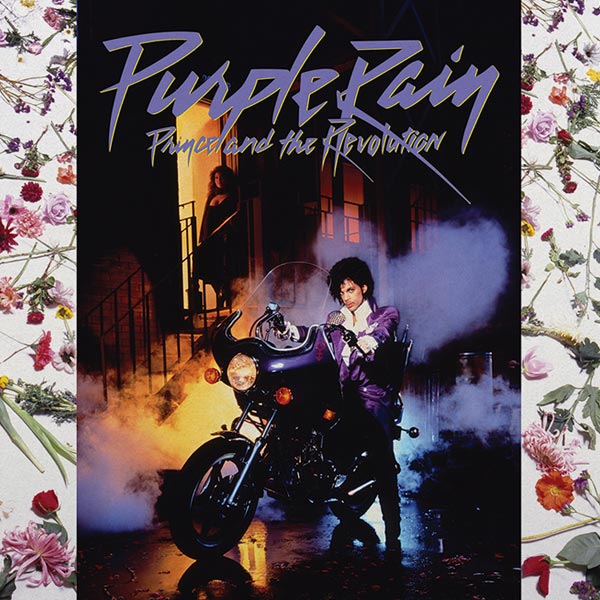
Prince’s sixth album was groundbreaking in many aspects. Featuring the track named Darling Nikki, the song proved so unsuitable for conservative America it triggered the creation of the sleeve sticker warning Parental Advisory over its explicit content. Second, requiring Prince to write a track to use as a segment in the film, which Magnoni wanted to back a montage portraying Prince’s troubled upbringing – the song written was When Doves Cry. When released in May 1984 as the lead single, When Doves Cry not only bought Prince’s first number one hit but was the first chart topper not to feature bass guitar. Topping the Hot 100 for five weeks and remaining in the chart for no less than six months, When Doves Cry became the biggest selling single of Prince’s entire career. The song was so influential it shaped the direction of electro-music forever. The album’s second single Let’s Go Crazy came two months later and likewise was sent to the top the Billboard Hot 100. The title track was the third supporting single and too climbed the US chart only to be denied the number spot on 17 November 1984 by Wham’s Wake Me Up Before You Go-Go. The fourth single I Would Die 4 U came out in December and peaked at number 8. The success of the movie would set the course of Prince’s meteoric rise to stardom. The public could not get enough of him.
The Purple Rain soundtrack was released on 25 June 1984 and achieved 1.3 million sales in its first day, a number that would eventually rack up a whopping 24 million units, and held the number one position in the Billboard album chart for 24 weeks. The film premiered at Grumman’s Chinese Theatre, Hollywood the following day and would gross $70 million – a not only highly impressive feat for a music movie but made it one of the year’s major blockbusters and historically the most successful music movie since The Beatles’ A Hard Day’s Night. The soundtrack was universally acclaimed and culminated in a win for Prince at the Academy Awards on 25 March 1985 for Best Original Score and was the highlight of the 1985 awards season which yielded Prince his most successful year in show business. The resulting Purple Rain Tour proved equally successful. Selling 1.7 million tickets and breaking venue records across its near 100 shows the tour grossed a staggering $30 million. To put its success into historical context, after Michael Jackson’s Thriller, no album by a black artist has spent longer at #1 in the US chart than Prince’s Purple Rain.
Inspired by Bruce Springsteen’s band E-Street Band, Eric Leeds, brother of Prince’s tour manager Alan Leeds, was added to the lineup of The Revolution to play saxophone on the tour. Purple Rain Tour launched on 4 November 1984 with seven shows at Detroit’s Joe Louis Arena. Selling out wherever it was played, the shows ran until 7 April 1985 and drew attendance of 55,000 at its final show – staged at Miami’s Orange Bowl (renamed ‘Purple Bowl’ for the occasion). Although Purple Rain Tour was intended to continue to Europe, exhausted by the gruelling itinerary, pressure, and just wanting to work on something else, Prince pulled the year’s most successful tour to a close. To placate his European fans who could not now attend the tour in person, Prince had the New York show at the Syracuse Carrier Dome televised live in what occasioned the first ever concert simulcast via satellite. This recording was subsequently issued on VHS home video titled Prince And The Revolution: Live, its sales certified Platinum on 6 August 1985. Above all, the LP amassed three American Music Awards in January 1985 and two Grammy Awards on 26 February (two for Purple Rain: Best Original Album and Best Performance, plus a third for Chaka Khan’s cover of I Feel For You as Best R&B Single which had also charted number one), and in March that Oscar for best soundtrack. Amid all this whirlwind success, Prince even found the time to work on the debut album for the tour’s support act Sheila Escovedo to create her album The Glamorous Life. With The Glamorous Life having also received a Grammy nomination for Best R&B Single, it saw Prince bag an unprecedented two nominations within the same award category.
Having topped both the album and singles charts, as well as a box office smash movie, Prince was an obvious choice to invite to participate in the historic LiveAid concert. But owing to scheduling commitments with Purple Rain Tour, Prince controversially declined. His also infamous turning down the offer to sing on the single We Are The World – deciding against turning up at A&M Studios to appear on the song despite being in LA right after the AMA’s having already collected three awards that night. In truth, Prince had no desire to perform vocals in front of the likes of Jackson, Ray Charles and the forty other music icons massed in the studio – preferring to send even his own engineer from his studio while laying down vocals. Prince instead offered a specially written song 4 The Tears In Your Eyes for the accompanying compilation. The track was recorded directly on the Purple Rain stage at New Orleans Superdome on 1 February. A subsequently shot video of him performing the song aired during the LiveAid concert at Philadelphia on 13 July 1985. Prince’s non-involvement in the event was met with both incredulity and destain by the media and his musical peers, who viewed it as an apparent arrogant snub. It brought Prince his first negative press coverage, which compelled him to write Hello (issued as B-side to Pop Life with his next album) in response to the criticism: “I tried 2 tell them that I didn’t want 2 sing, but I’d gladly write a song instead. They said ‘Okay’ and everything was cool, ‘Til a camera tried 2 get in my bed.”

Prince’s follow-up to Purple Rain was widely expected to reprise its winning formula. Although largely written during Purple Rain Tour and recorded at his rented warehouse rehearsal space at 9025 Flying Cloud Drive in the quiet outskirts of Minneapolis, the style and tone of Prince and The Revolution’s second LP Around The World In A Day was polar opposite by comparison. The music press, Warner, and the buying public alike, all eagerly anticipated radio-friendly tracks in the gusto of its predecessor, considering that album’s stellar success. But Prince had other ideas. Bored performing Purple Rain on tour and not wishing to write what was to his mind an obvious and all too easy sequel, Prince, music’s great risk-taker, opted for a different slant, drawing Around The World In A Day on psychedelic influence. The album received mixed reviews as result, yet it hit the number 1 spot in the US and sold a not unimpressive 4.2 million copies worldwide. Around The World In A Day also produced two US top ten singles, with Raspberry Beret (#2) – winning an MTV award for video production – and Pop Life (#7).
With The Time disbanding after their third record Ice Cream Castle citing Prince’s inflexibility to accommodate any creative input, in 1984 Prince assembled a replacement side-project named The Family. The band was formed of those from The Time who remained loyal to Prince, and a guise for him to grow his relationship with its appointed co-lead vocalist Susannah Melvoin (twin sister of Revolution guitarist Wendy Melvoin). White and unlike Prince’s past Latino girlfriends, Susannah became the love of Prince’s life and in 1985 they got engaged.
Eager to start a life together, the couple moved into their new home a secluded mansion set within a 30-acre private parkland at 7141 Galpin Blvd, Minneapolis. Purchased out of the proceeds of his success with Purple Rain, whilst fitting out his home studio which would not be complete until March 1986, Prince flew to France to shoot his second feature movie, a tragicomedy entitled Under The Cherry Moon. Filmed entirely on location in the French Rivera between September and November 1985, for which Prince requested a purple Rolls Royce despite being shot in black and white. Prince played the lead character Christopher Tracy, a piano playing gigolo exploiting the affections of heiress Mary Sharon. Steven Berkoff played her outraged father. The role of Mary was intended for Susannah Melvion but acting was clearly not her forte. The part was instead cast to a professional actress and became the movie debut for one Kristin Scott Thomas. Under The Cherry Moon was a commercial failure. Having met considerable success with his Purple Rain movie, Warner dared not question Prince’s judgement when demanding to shoot his second motion picture – a romantic comedy. Prince would not only star but direct it as well. Under The Cherry Moon premiered in Wyoming on 1 July 1986. It paled in comparison against Purple Rain and grossed a mere $10 million at the box office. Its accompanying soundtrack Parade – Prince and The Revolution’s third and as transpired final album – fared remarkably better, reaching the top 5 in both the US and UK official charts. Recorded between Hollywood’s Sunset Sound and far less glamorously at Prince’s newly acquired rented warehouse on Washington Avenue in the suburb of Edina, its lead single Kiss landed Prince his fifth US chart number one and fourth Grammy win; Best Vocal Performance. It became one of the most recognisable songs of the decade.
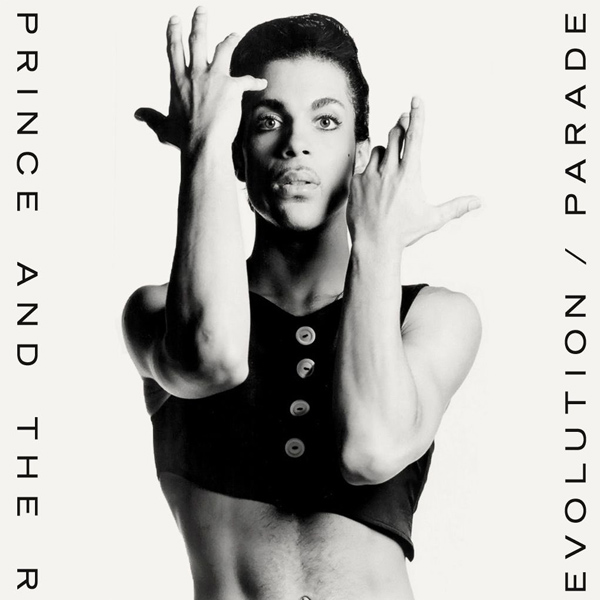
Upon returning to the US after the filming, Prince played 11 short notice shows that became known as the ‘hit and run’ concerts. They were audience tests for a larger tour, Parade Tour, which would be staged throughout Europe, his first full-scale world tour. For it, The Revolution’s touring lineup was expanded to include a second guitar to free up Prince, filled by Miko Weaver a recruit from Sheila’s band E-Train. Matthew Blistan was enlisted on trumpet after a recommendation from Eric Leeds to give the band a proper brass section. Prince gave Atlanta resident Blistan the stage name Atlanta Bliss. A dance trio was also added – comprising Jerome Benton, Wally Safford and Greg Brooks. Although Parade Tour was a brief run of 19 arena shows, it immediately sold out its entire allocation of 150,000 tickets, and again with Sheila E as opening act. The tour also introduced the aftershow performance, which became a feature of Prince’s tours since. The run cemented Prince’s status as a major star in Europe. Once back in his now operational Galpin Blvd home studio toward the end of 1986, Prince continued the most prolific year of his recording career. As well as working on three albums of his own, his attention also turned to expanding the catalogue of his side projects: second album for Sheila E, plus a new and untried avenue as an instrumental jazz-funk outfit named Madhouse.
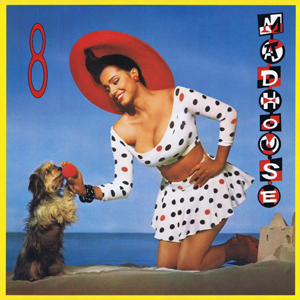
The lineup of Madhouse comprised simply Prince on keyboards and Eric Leads on sax. It was Leeds who introduced Prince to jazz, which subsequently became a huge influence on his future creative direction. Prince admired how jazz musicians interacted on stage and he introduced this philosophy into his live act to become a better bandleader. Concerned the project might not be well received, Prince kept his name from it. The collection’s eight tracks debuted on 21 January 1987 as an LP simply entitled 8. Despite charting at 107 in the US, it met high praise from the jazz community, and in November was followed with a second album 16. Madhouse expanded into a quartet for the LP, including Sheila E (drums) and, having introduced Prince to Oakland bandmate, Levi Seacer enlisted on bass guitar. 16 did not chart and plans for a third LP were abandoned.
As Parade Tour progressed throughout the summer of 1986, Prince felt increasingly constrained as he looked to pursue new creative directions he felt was unable to do in a collaboration. The expansion of the touring lineup caused infighting among The Revolution, which the musicians viewed was morphing into a dance show with the inclusion of Benton, Safford and Brooks, leaving the band in the shadows and overlooked. Prince’s frustration was laid bare during the climax of the tour’s final show, when he smashed his two custom Cloud guitars onstage while performing Purple Rain. Doing that and to this song seemed to symbolise his desire to draw an end to The Revolution era and move onward alone. In that moment the band realised their time was over. Prior to the tour, the recording sessions for what was to be The Revolution’s fourth album was already complete by April 1986, but when the tour ended that September, Prince fired the band and printed the announcement as a short press release on 17 October 1986 confirming curtly “Rock star Prince is disbanding The Revolution, his band of the last four years, and is exploring a new direction.” The band’s final project was envisioned as a double LP named Dream Factory, which they completed just prior to Parade Tour and was to be their fourth album. On his return to the studio, Prince sprang to work on a new solo project, crediting its tracks to his latest pseudonym Camille. By that November an entirely new eight track album titled Camille was ready. Yet that too was quickly abandoned as he returned once again to the tracks recorded for Dream Factory. Prince set about reworking the project to cleanse The Revolution from the material. The resulting record expanded into a triple album which he named Crystal Ball – with much of the new tracks drawing inspiration from the breakdown of Prince’s relationship with Susannah Melvoin.
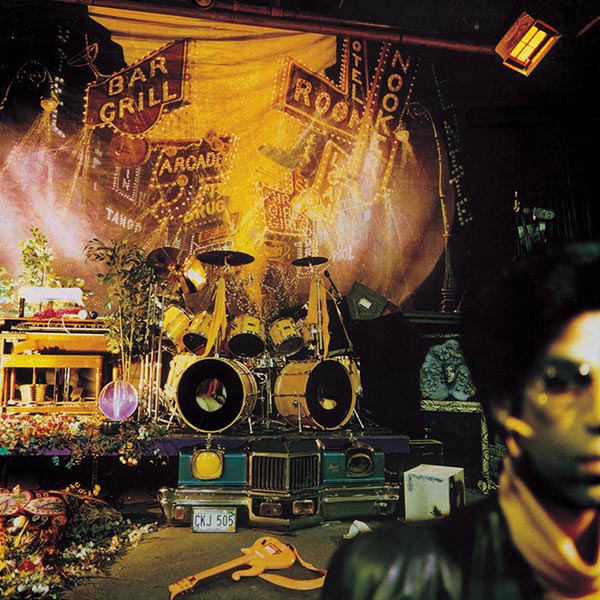
Apprehensive over the commercial potential of a triple LP, Warner’s Lenny Waronker was handed the unenviable challenge to talk Prince into paring the album down to two discs. Prince begrudgingly obliged and, settling on a new name for this project, the configuration of the resulting double album was titled Sign O’ The Times. The album was released to critical acclaim on 30 March 1987 and charted deep in both the US and UK top ten. Although producing three top ten singles, including U Got The Look – a late addition to the configuration and duet with friend Sheena Easton – which peaked in the Hot 100 at number 2, the LP failed to meet expectations with the American audience. At the 1988 Grammys, Sign O’ The Times famously missed out on Album of the Year which instead was received by U2 for The Joshua Tree. Prince was bitterly disappointed.
For the supporting Sign O’ The Times Tour, a new backing band was needed to replace those fired from The Revolution. Sheila E joined the band full time to replace Bobby Z on drums. Revolution’s sole survivor Matt Fink remained and was joined on keyboards by Boni Boyer. Miko Weaver filled Wendy’s role on guitar, and Levi Seacer Jr took BrownMark’s place on bass – all three of the newcomers being enlistments from Sheila’s band. TV talent show star Catherine “Cat” Glover was signed on as dancer and backing vocalist and completed the lineup. Madhouse was the tour’s opening act. Just like its preceding Parade Tour, Sign O’ The Times Tour was focused in Europe to shore up Prince’s ever growing fan base overseas. The moment marked a turning point in his career, that for the first time witnessed Europe overtake the US in sales of his music, largely due to the US market viewing Prince as slipping too deeply into mainstream pop since Purple Rain and forsaking his funk roots of earlier albums. This was indeed the core reason behind Prince disbanding The Revolution to refresh both his studio output and live act. But this outdoor tour was beset with bad weather, leading to the cancellation of his two shows planned at London’s Wembley Stadium that June. Trouble finding alternative indoor venues large enough and at short notice saw the tour’s entire UK schedule pulled. Still, 350,000 fans did manage to catch its run of the 34 dates played. Because many had missed the shows due to multiple cancellations caused by the weather, and the schedule missing out the US entirely, Prince had two of its final concerts in Netherlands filmed by a hastily arranged local crew. The footage was spliced together with extra scenes filmed at Prince’s newly operational Paisley Park Studios and became the facility’s debut production, the accompanying Sign O’ The Times movie. Burned by the commercial failure of his previous movie Under The Cherry Moon, Warner declined to distribute the new movie, leaving Prince to source an alternative independent provider. Against expectations the movie grossed a highly respectable $3 million and, with Sign O’ The Times since considered Prince’s masterpiece album, the accompanying movie was hailed the greatest concert movie of all time. The success of 1987 helped revive Prince’s American following.
Prince was not used to not getting his way.
Alan Leeds, tour manager – 1983-1989
Prince relocated his studio from Galpin Blvd in 1987 to his custom-built recording studios and film production complex at 7801 Audubon Road, which he christened Paisley Park. Through his enrichment, in January 1986, Prince commissioned the construction of his own recording and tour rehearsal space Paisley Park Studios, a sprawling two-storey white panelled exterior, state of the art recording facility complete with movie soundstage. It was more akin to an industrial unit than a rock star’s mansion, hidden in the rural outreaches in the Minneapolis suburb of Chanhassen. Back in 1985 Warner had allowed Prince to establish his own label, Paisley Park Records. Albeit an imprint of Warner Bros Records, the music giant had taken the rarely used step to grant an artist full creative control of their label’s entire output. Not only was Prince intent to use the studios to produce his own music, he set about signing new acts to the newly inaugurated Paisley Park Records. The first artist signed was Jill Jones an occasional girlfriend who Prince knew since 1980 and had appeared in the Purple Rain movie. So keen was Prince to showcase her vocal talent, he wrote every song on her self-titled debut album. Prince concealed his involvement under the pseudonym Joey Coco but he had no need to worry, Jill Jones became arguably the best associated artist albums released under the Paisley label.
Never before had an artist established a self-contained creative compound. Paisley Park became operational on 11 September 1987, built to a final cost of $10 million and housing two full recording studios, one rehearsal studio, as well as a 12,400 square foot soundstage and suites boasting facilities able to stage full-scale film production and concert rehearsals all under one roof. Such was its facilities, until 1996 the complex was opened to commercial hire. Its patrons included Madonna and Stevie Nicks. Paisley Park remained Prince’s main recording studio until the end of his life in 2016, functioning as a record label in its own right and receiving production credit to Prince’s albums until 1993. Madonna produced portions of her Like A Prayer album at Paisley Park in 1988, for which Prince co-wrote and duets Love Song, as well as provided guitar solos for Keep It Together, Act Of Contrition and produced the first cut of the title track Like A Prayer. Several movies were also shot there.
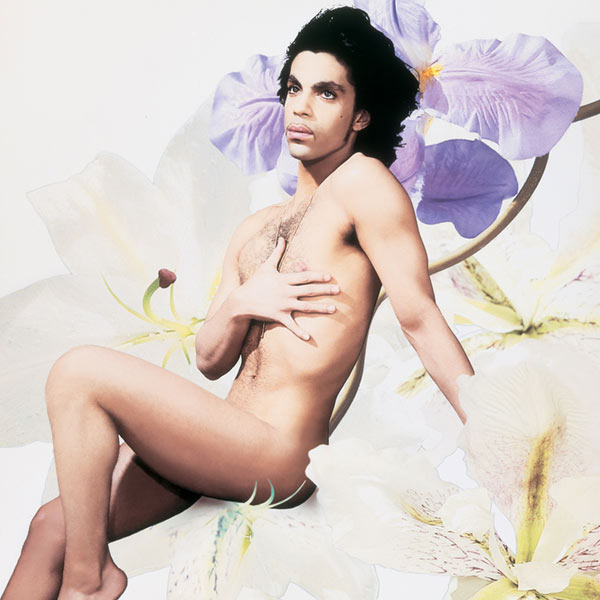
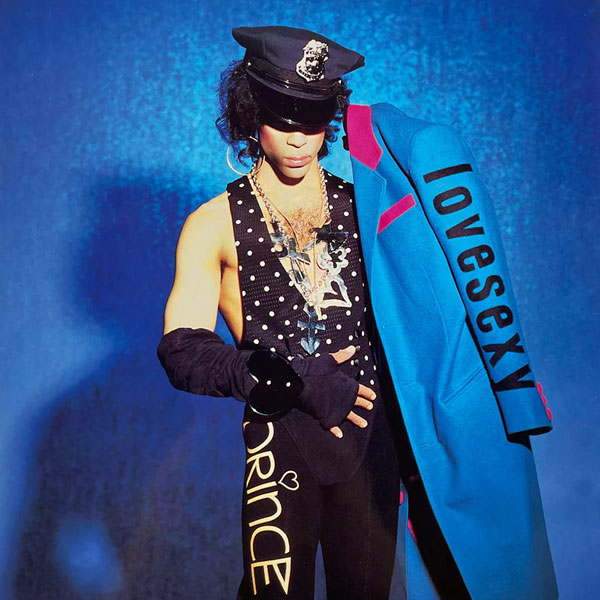
Responding to criticism Prince had lost his funkiness and that Sign O’ The Times lacked bass, in 1986 Prince worked on a new album this time influenced in the emerging genre of hip-hop. Returning also to the name Camille, he intended this to be the funkiest album ever made. Its cover would be badass black and the project was so named The Black Album. Yet its content proved too dark even for Prince to release. After an encounter with a poet named Ingrid Chavez on 1 December 1987, days before the album’s planned street date, Prince pulled The Black Album from sale. Coming to a realisation its lyrical narrative was too negative and lewd, having created it during a one-time experimentation with ecstasy, Prince’s inaugural studio project at Paisley Park was to produce its hurriedly worked replacement – a record far more positive in tone as if in atonement for The Black Album. This new LP, titled Lovesexy, Prince tenth record, was finished in January 1988 after taking a mere three months to complete. It became one of history’s quickest completed albums from writing to release. Released on 10 May 1988, Lovesexy became Prince first album to climb all the way to the top of the UK chart. But in the US peaked at only number 11. The album spawned only three promotional singles. Whereas the lead single Alphabet St. reached number 8 in the US, fellow singles Glam Slam and I Wish U Heaven fell short of the top-20. Yet again more copies of his LP was sold in Europe than did in the US. Once again, the supporting Lovesexy Tour kept Prince on friendly ground and concentrated in Europe; drawing a total audience of 500,000 to stadium-sized venues across its 77 performances. The show’s production was staged ‘in the round’ and was so extravagant it barely broke even despite selling out. Frustrated with his faltering momentum in the US and the budget busting Lovesexy Tour, and lack of mainstream hits from Paisley Park Records other than his own music, Prince fired his management team Cavallo, Ruffalo and Fargnoli on 3 January 1989 and appointed Purple Rain director Magnoli as his new manager.
Magnoli’s first action was to reinvigorate US interest in Prince. The star had shied from interviews, throughout the 1980s, and so in 1989 Magnoli put together a TV documentary entitled Prince: A Musical Portrait to reintroduce him to the nation. He shot footage of the interiors of Paisley Park where cameras were previously forbidden and captured interviews with Eric Clapton, George Clinton, Terence Trent D’arby, Quincy Jones, Little Richard, Randy Newman and Miles Davis, plus associates Owen Husney and Alan Leeds, including band members, to chronicle the enigma of Prince. The documentary also included archive footage of rehearsals and an aftershow captured during Lovesexy Tour, personal footage from Dirty Mind Tour, as well as at work in the studio. The project subsequently passed to the BBC and was re-edited and aired as an hour long Omnibus special The Prince of Paisley Park, on 13 December 1991.

Although growing in popularity in Europe, interest in Prince had dampened in the US. In the attempt to boost the profile of their star signing, Warner Brothers encouraged Prince to contribute to the soundtrack for their latest big-budget movie, Batman. Since its director Tim Burton hoped to include 1999 and Baby I’m A Star in key scenes of the movie, Prince, a fan of the TV series since childhood, decided to instead make an entire album of new material and write and record that solo. The album was a considerable success and stormed to the top of the US and UK charts. Selling 6 million units in the US, 11 million worldwide, Prince’s Batman soundtrack became one of the fastest selling albums to date having achieved 1 million sales within its first week. Moreover, its lead single Batdance secured Prince his sixth US number one single. The experience rekindled Prince’s interest for movie-making, and latching to his renewed success, Warner agreed to finance Prince to script his third movie and its accompanying soundtrack. The resulting Graffiti Bridge LP was recorded mainly by Prince again working largely alone. Its tracks were re-workings of much older material amassed within his now fabled vault of quite considerable unreleased back catalogue. The soundtrack included appearances from a specially reunited The Time, their first collaboration with Prince since shooting Purple Rain. The project was planned to be a visual and audio spectacle, with Prince reprising his role as The Kid, it was created amid the hope the new film would emulate the Oscar winning formula of its 1984 predecessor.
The Graffiti Bridge movie was shot entirely at Paisley Park Studios over a mere thirty-six days and complete by March 1990. The film was in essence the sequel to Purple Rain, continuing the story of one-upmanship between two battling bands this time fighting over competing venues. After courting Kim Basinger and Madonna as potential costars, the lead female role as The Kid’s guardian angel was passed to the poet Ingrid Chavez. As a condition for financing the movie, Warner reputedly paid The Time $10 million to reunite and appear as the original lineup. The proviso was they would be afforded far greater creative input into their reunion album Pandemonium. Yet they, and the movie’s stylish dance routines – choreographed by Paula Abdul no less – and lavish music sequences could not improve its fortunes. Plagued with countless changes in both personnel and to the script, the movie failed to perform anywhere close to the cinematic success of its forerunner. Editing overran and the storyline and characterisation became muddled. When the movie was finally released, Graffiti Bridge was poorly received and swiftly cancelled from theatres. It came at a perilous moment for Prince, when music trends were shifting to hip-hop and R&B and taking America by storm.

The movie’s failure was a massive blow. On a personal note, the project caused the resignations of Prince’s long-time confidants Magnoli and Fink. The accompanying soundtrack Graffiti Bridge dropped in August 1990 when the film was supposed to premiere. Plagued with reshoots its premiere slipped to November. A telling portent to its dismal success.
The LP received one newly written track Thieves In The Temple, created in the last minute to give the album a strong lead single, and was a top 10 hit in the US (#5) and UK (#7). Securing Prince yet another number one album in the UK, Graffiti Bridge charted 6 in the US. Despite his box office woes at home, Prince enjoyed tremendous success overseas and that June embarked on his supporting Nude Tour. It was a tour so named to highlight this was a stripped back arena affair – albeit actually to recoup expense incurred by the preceding Lovesexy shows. Nude was also notably Prince’s first tour not in support of an album, and because of diminishing album sales was yet another tour to miss the US. Nude Tour was nonetheless attended by a million fans throughout its run of 60 shows throughout Europe and Japan. Although performing only a few songs from either Batman or Graffiti Bridge in its later dates, during this time on the road Prince crucially rekindled his love for playing with a band. Eager to return to the studio after the tour he cast aside his drum machine and sampler as his next album would have edge and the driving power of a live band. Yet Prince was still himself reaching for a big commercial hit to rekindle his US following, still in steady decline since his Purple Rain peak. Frustration began to fester into a simmering blame toward his label Warner Bros Records. In truth his late 80s output was received as trend following than defining new boundaries in music. Faced with the prospect of dwindling relevance overshadowed by the growth of hip-hop, having veered too deeply into the white mainstream and more aligned to European tastes, a daring reboot was required to his career and to the material of his next and what was to be thirteenth (and not so solo) studio album. It was time to get funky.
Prince biography continues »
The Warner dispute (1991 – 1996) & NPG era (1997 – 2016)
© Goldies Parade, 1998 – 2026 • Privacy