
Home / Prince Discography / Prince Albums /
Dirty Mind Prince album
Warner Bros. Records
albumPrince’s lyrics bear little relation to standard AM radio floss.
Prince’s third studio LP Dirty Mind was written in an array of hotel rooms while he was on the road as the support act for Rick James on his Fire It Up Tour. Straight after the tour, between May and June 1980 Prince laid down the tracks in his basement where he had set up a studio at 680 North Arm Drive, the home he rented from September 1979 situated in the quiet reaches of Lake Minnetonka, financed by his burgeoning success. Having recorded his first two albums in California, Dirty Mind was Prince’s first album created in Minnesota. Dirty Mind marks a key development in the evolution of Prince’s music in that his second LP, self-titled Prince, had been created specifically to score a hit record following the disappointing performance of his debut album For You which reached only 138 in the US chart, whereas Prince peaked at number 22. He wanted his third LP to be authentic to his sound and abandon the disco influence in his preceding LPs and double down on funk. This switch in approach spawned a new style of synthesiser led funk and gave rise to Prince’s trademark ‘Minneapolis sound’. To underscore this, Prince’s basement studio received a production credit on the sleeve as “Somewhere in Uptown”. Dirty Mind was the moment that Prince wanted to be different and daring.
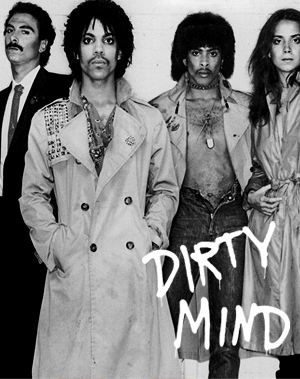
Unlike his preceding albums, on Dirty Mind Prince is accompanied with band members and accepts their creative input. Keyboardist Lisa Coleman provides supporting vocals on Head. Matt Fink created the synth melody of the title track. And on Uptown Andre Cymone created the bass part, but when Prince refused to give credit to Cymone on the album’s sleeve – excusing the omission as an innocent mistake caused by the designer – Cymone quit the band immediately after the album’s supporting tour.
Dirty Mind brings a radical change in artistic direction following Prince’s previous albums concerned with love and lust and wholesome in comparison. Being that Dirty Mind was the final also instalment of his initial three album deal with Warner Bros, it is therefore a bolder record, funkier and created to cause a stir. The album was shipped to radio stations with an advisory imploring them to hear the entire record before deciding whether they wanted to air it. The sexual narrative of Dirty Mind triggered division amongst critics, as well as within Prince’s own band. Whilst many critics loved the new record, its lewd lyrics were not to everyone’s taste in Reagan’s America of 1981. Prince’s keyboardist Gayle Chapman quit in short order at the prospect of having to sing Head on tour, her hastily enlisted replacement Lisa Coleman put her vocals to the track instead.
It ain’t about no downtown, nowhere bound, narrow-minded drag, it’s all about being free
Prince’s elder half-sister Sharon Nelson is believed to be the inspiration behind the track Sister: “Incest is everything it’s said to be” he states proudly in the song. Prince lived with Sharon in her New York apartment briefly in 1976 during what turned out as a failed attempt to score himself a record deal prior to his introduction to Owen Husney on returning to Minneapolis. Prince’s image is overhauled too.
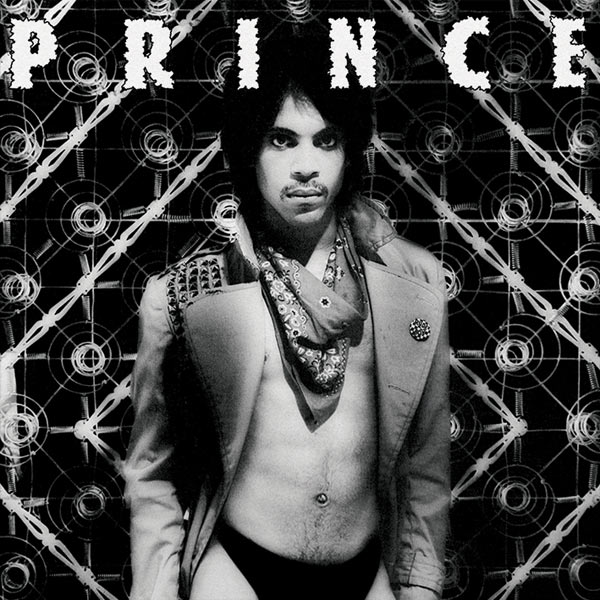
With disco into its death throes, Prince was keen to establish his niche as a rock-funk artist and set himself apart from the wealth of R&B acts emerging at that time. Dressed only in a thong, neckerchief and trench coat, this daring new direction caught the eye of Rolling Stone and scored his first interview with the celebrated magazine. Their review rated the album a very favourable 4.5 out of 5. Mission accomplished.
Dirty Mind peaked at number 45 on Billboard on its chart debut on 8 November 1980, and sales rose gradually to 500,000 to attain RIAA’s Gold certification on 20 June 1984. Yet Dirty Mind was originally considered a commercial disappointment by Warner Brothers, compared to the 1 million units his previous LP achieved. Because it was so unsuitable for radio Dirty Mind failed to chart at all in the UK. Dirty Mind was nonetheless the daring all-out reinvention of Prince’s act and grabbed the attention of the music press. For his Rolling Stone interview, Prince even demanded they use his own photographer, Allan Beaulieu, over theirs. Prince’s brand of “revolutionary rock and roll” is showcased on the album’s iconic cover photo, announcing to the world that he was no ordinary R&B act but a genre of his own making. Dirty Mind was perhaps too ahead for its day, only later would its originality gain broad appreciation. Dividing critics on its release in 1980, in 2016 Rolling Stone placed Dirty Mind 204th in their top 500 albums of all time, and in 1989 ranked it 18th in their list of best albums of the 1980s. Dirty Mind also eventually entered the UK charts, in 2016 in the week following Prince’s sudden death it reached position 61.
The track Partyup contains a groove created by friend Morris Day when using Prince’s North Arm Drive home studio. Prince liked it so much, he offered Day the choice to receive either $10,000 cash upfront or help to get a record deal. Morris opted for the record deal and The Time was famously created out of this pact. Partyup is Prince’s first track to draw inspiration from political events – taking aim at Jimmy Carter’s reinstatement of the military draft. Prince thinly hid his production involvement on Dirty Mind behind his first pseudonym, Jamie Starr – using it as engineering credit, then later ‘producer’ for side projects The Time and Vanity 6 to shield him should these fail. He need not have feared, plus Jamie Starr was the worst kept secret in music.
Dirty Mind was supported with the Dirty Mind Tour, which proved a turning point in his career in establishing Prince as a serious live act. Two singles were released in the US to promote the October 8th release of the LP. Uptown was the lead in September 1980, with the title track following that November. Both failed to enter the Hot 100. Curiously, album sessions outtake Gotta Stop (Messin’ About) was released as an A-side single in the UK on 29 May 1981, issued in both 7″ and 12″ cuts to aid the promotion of Prince’s first gig in the country. That show was played at London’s Lyceum Theatre on 2 June as part of his three date fleeting introductory European tour comprising Amsterdam’s club Paradiso, London, and the Théâtre Le Palace at Montmartre, Paris. Uptown enjoyed good traction in Billboard’s Disco chart and peaked at number 5. Head was relegated to B-side for the UK only releases of Gotta Stop (Messin’ About) and Do It All Night, and was a 7″ solely in the Philippines. It did not chart in either territory. The impact of Dirty Mind was confirmed in 1983, when the Prince’s music began to be sought after by other artists – When You Were Mine was covered by Cyndi Lauper and included in her debut album She’s So Unusual which peaked at number 4 in the US.

Cover story
Prince’s brief to his photographer Allen Beaulieu (whom never shot for a record cover before) was that he wanted to be pictured laying on a bed in the cover shot for the Dirty Mind album, an idea first tested for the inner sleeve of his debut LP For You in 1978. Beaulieu instead purchased a battered old box-spring bed frame from a junkyard for $25, which he upturned and lit to form a background for Prince, who was wearing little more than a flasher mac and neckerchief, to produce this iconic photo capturing him as a visionary artist. The bed concept conveyed sexual freedom, and on the sleeve’s back cover Prince does indeed lie on the bed – shot in the bedroom of his then girlfriend Kim Upsher, whose wall he spray-painted with the album’s track listing. Beaulieu’s reimagining of Prince’s public image was a defining moment to setting Prince on the road to stardom. Never before had a black artist been pictured so dressed. In 2023, Billboard placed Dirty Mind 84th in its list of greatest album covers of all time.
Performers
- Vocals / all Instr
- Prince
- Keyboards
- Matt "Dr." Fink Dirty Mind and Head
Data
- Producer
- Prince
- Label
- Warner Bros. Records
- Distribution
- Warner Bros. Records
- Cover/Design
- Allen Beaulieu
- Released
- 45 years ago on 8 October 1980
- Reissued
- 4 February 2022
- Running Time
- 30:18
- US Chart Peak
- 45
- US R&B Peak
- 7
- UK Chart Peak
- 61
- Prince Album
- #3
- Orig. Formats
-
Tracklist
- Dirty Mind (4:11) 1
- When You Were Mine (3:44)
- Do It All Night (3:42)
- Gotta Broken Heart Again (2:13)
- Uptown (5:30) 2
- Head [feat. Lisa Coleman] (4:40)
- Sister (1:33)
- Partyup (4:24) 3
Released as a single
1 Synth parts created by Matt Fink.
2 Co-written with André Cymone.
3 Co-written with Morris Day.
Singles from Dirty Mind

Uptown
Warner Bros. Records
- Released
- 10 September 1980
- US Chart Peak
- 101
- UK Chart Peak
- No Release
- Cover/Art
- Prince
- Format
-
- Uptown [Edit] (4:09)
- Crazy You (2:15)

Dirty Mind
Warner Bros. Records
- Released
- 26 November 1980
- US Chart Peak
- Did not chart
- UK Chart Peak
- No Release
- Cover/Art
- Generic sleeve
- Format
-
- Dirty Mind [Edit] (3:54)
- When We're Dancing Close And Slow (5:18)

Do It All Night
Warner Bros. Records
- Released
- 6 March 1981
- Distribution
- WEA Records
- US Chart Peak
- No Release
- UK Chart Peak
- Did not chart
- Cover/Art
- Generic sleeve
- Format
-
- Do It All Night (3:42)
- Head [feat. Lisa Coleman] (4:40)
Released in both 7" and 12" although edits are identical.

Gotta Stop (Messin' About)
Warner Bros. Records
- Released
- 29 May 1981
- Distribution
- WEA Records
- US Chart Peak
- No Release
- UK Chart Peak
- Did not chart
- Cover/Art
- Allen Beaulieu
- Format
-
- Gotta Stop (Messin’ About) (2:54)
- Uptown [Edit] (4:09)
A-side track not on album.

Gotta Stop (Messin' About)
Warner Bros. Records
12"/Maxi-Single
- Released
- 29 May 1981
- Distribution
- WEA Records
- US Chart Peak
- No Release
- UK Chart Peak
- Did not chart
- Cover/Art
- Allen Beaulieu
- Format
-
- Gotta Stop (Messin' About) (2:54)
- Uptown (5:30)
- Head (4:38)
A-side track not on album.
Supporting tour
Dirty Mind review
After two albums to get his footing in mainstream music, by the third album Prince rebooted his image from a clean run of the mill disco act to revolutionary rock and roll avant-garde artiste. With Dirty Mind Prince cast lose his moral devil and got to what fascinated him most. Women.
If you really need to find Prince’s musical roots they don’t shine through better than Dirty Mind. The Minneapolis Sound is the gift Prince gave to music – Dirty Mind is ground zero for synthesised rock. Prince comes clean and names the album after the one thing on his mind – filth. He heaps the smut into every groove and lyric, from the title track to Do It All Night and Head. All alone and horny, Prince gets melancholy with When You Were Mine and Gotta Broken Heart Again but goes out partying in Uptown – the artsy district of Minneapolis where everything went down. Indeed there’s everything from incest with his sister to foreplay with Head. There’s little room for politics here, just simple unabashed 80s hedonism. Dirty Mind concludes all elated with the anti-draft anthem Partyup denouncing “fighting war, is such a f*ing bore,” life’s better as one never ending party “somewhere in Uptown”. A life everyone longs for, so why not make a record about it. For the aforementioned songs Dirty Mind was considered tasteless and plain crude back in the day but what it achieved was shaping the sound of the Minneapolis music scene and Prince’s ultimate legacy. Prince and the music world was never the same afterwards.
The future began right here. Dirty Mind is no juvenile record, it is a bold voice for freedom. A more profound release than most shall ever realise.
Dirty Mind is rated 4.5 out of 5 by Goldies Parade.
© Goldies Parade, 1998 – 2026 • Privacy