

Parade Tour - Prince 1986
1986
Concert tourIt was so slick, so professional; choreography doesn’t seem an apt enough word.
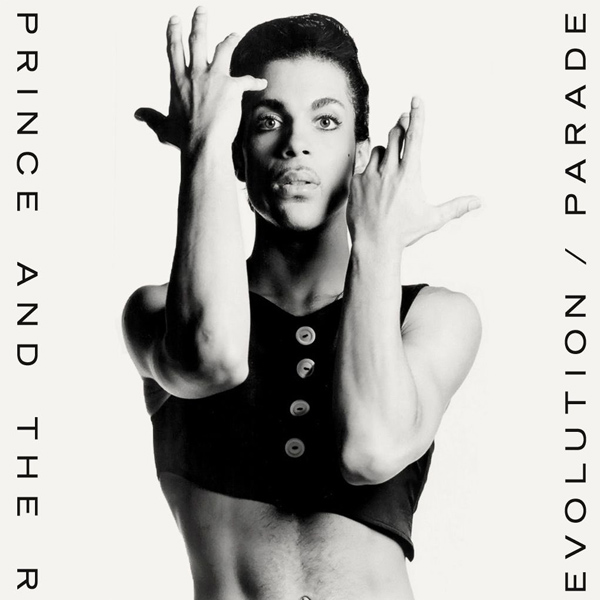
Parade Tour launched on 3 March 1986 as a micro tour of the US as a run of elevenshows performed by Prince and The Revolution, so named the Hit And Run Tour. The tour was in promotion of their third LP, Parade, which was due for release at the end of that month and the Under The Cherry Moon movie following on 1 July.
Because Hit And Run was Prince’s first tour since his mammoth 100 date itinerary of arena shows for Purple Rain Tour staged throughout 1984/85, his 1986 concerts were also predicted to be a world tour but was instead kept as a low key affair. Barely a year previous, Prince was so burnt out from touring he prematurely announced his indefinite retirement from performing live. Unlike the setlists for his 100 date Purple Rain Tour which was heavily structured and ultimately monotonous for him to perform, Prince’s 1986 shows allowed for spontaneity.
As Hit And Run Tour wound on, it became increasingly apparent the movie was a commercial failure. The tour booked small capacity venues and the shows were announced on radio at very short notice, coining the phrase Hit And Run. It found fans scrambling for tickets which sold out fast, putting the tour into very high in demand – some exchanging hands for as much as $300 per ticket. The Hit And Run show performed at the Cobo Arena, Detroit on Prince’s birthday on 7 June was captured on film and was broadcast throughout Europe and Japan as an hour long special titled Parade Live to aid momentum for the upcoming Parade Tour in those territories.
The show’s staging was the design of LeRoy Bennett, drawing on the movie’s black and white chic. Gone were all the props of previous tours, Parade Tour was a basic affair concentrated on the music. The stage floor sported a black and white chequered pattern. At the rear of the set sat Bobby Z on drums, perched atop a high central riser. Prince’s grand piano was on the floor in front. Flanking the drums, stood paisley wrapped speaker stacks and two mid-level risers occupied by Fink and Coleman’s keyboards. Prince would leap from the risers with flying splits. The show was high energy, and with the set displaying a stripped down design, the predominate feature was dynamic lighting provided by two large triangular rigs above stage. Prince wanted the world to look upon him as a world class artist.
Prince’s piano solo segment was played using a grand piano, albeit non acoustic. Its keyboard was a Yamaha KX88 synthesiser disguised inside a standard grand piano shell sprayed purple and hiding a Roland MKS-20 synth rack. The arrangement came out of necessity as Prince took to dancing on the lid of his Yamaha CP-80 grand during Purple Rain Tour, causing its hammer actioned acoustic strings to vibrate. This new setup replacing strings with microchips sounded so close to the real thing the disguised KX88 remained Prince’s favoured touring piano up to 1993 as well as a lighter and thus more transportable solution to taking a real grand piano on the road.
Parade Tour proper (also printed titled Under The Cherry Moon Tour in some newspaper ads) opened that August when the tour transferred to Europe where Parade album enjoyed greater commercial success. Parade Tour occasioned Prince’s first full scale tour of Europe as well as took him for the first time to Japan, territories Purple Rain Tour intended to call at in 1985 but cut due to Prince tiring toward the end of its US run. The itinerary for Parade Tour was shorter too for that reason. Opposed to US theatre leg, Europe’s Parade Tour was upscaled to arenas and was supported by Sheila E promoting her album Romance 1600. It too immediately sold out the entire allocation of 150,000 tickets across all nineteen dates. European reviews were ecstatic and further dates were anticipated but did not come to pass owing to the Chernobyl disaster on 26 April 1986 and fears of radiation engulfing Europe.
The impact of global events also delayed the tour’s Europe leg which was due to begin that April but rescheduled to the summer due to geopolitical tensions arising out of the US bombing of Libya on 15 April. The opening months of 1986 were marred in tragedy with far reaching consequences: beginning with the explosion of the Space Shuttle Challenger on 28 January, and then bombing of a West Berlin disco on 5 April leaving 40 American servicemen dead and led to the retaliatory airstrikes on Libya on the 15th. Prince would recall the events and the worsening AIDS epidemic in Sign O’ The Times later that year.
To celebrate the launch of the Europe leg of Parade Tour, which opened with three nights at Wembley Arena, Prince famously played his first ever aftershow, which he staged at Busby’s club on London’s Charing Cross Road in the early hours of 13 August 1986, joined onstage by Ronnie Wood and Nile Rodgers. The following evening, Ronnie Wood and Sting guested in the encore of the main show, with a second aftershow performed that night. The two aftershows played in London ushered in a long line of legendary after concert shows that Prince would stage throughout his career. This new element introduced to his touring routine kept his bands sharp. Parade Tour sparked Prince’s love affair with Europe that endured the remainder of his touring career.
The Revolution loved the looser format of Parade Tour which nurtured improvisation, opposed to the rigid setlists of Purple Rain Tour that demanded every song played from the album. Whilst Parade Tour drew heavily on Around The World In A Day and Parade albums, Prince relished the freedom also to dive back into the hits from his early catalogue, and his renewed energy was palpable in the performances. Unlike any of his previous tours, Prince played little on the guitar, using it only in the show’s climax with Purple Rain. Guitar duties were otherwise delegated to Michael “Miko” Weaver. Performing in Sheila’s band as opening act on Purple Rain Tour, Weaver first joined Prince in the studio to record Mountains in November 1985 before being drafted into The Revolution full time to introduce a funkier player in Prince’s lineup and free him to focus on lead vocals and increasingly energetic dancing. Parade Tour introduced a Hammond B3 Organ, positioned stage front and ready for Prince to play at whim during the concert. To compliment the show’s jazzier lilt, Matthew Blistan, stage named Atlanta Bliss, was also added to The Revolution on trumpet in accompaniment to Eric Leeds, re-enlisted into the touring band on saxophone. The continued expansion of the band to incorporate Wally Safford, Greg Brooks and Jerome Benton as a dance trio, positioned in front of the musicians on stage, caused escalating disagreements internally the longer Parade Tour remained on the road.
Behind the scenes, tensions mounted as the instrument-playing members of the band viewed the introduction of dancers to the lineup served only to distract the audience from their performance. Their inclusion was the result of Prince’s intention to shift his music from pop to funk. But morale worsened and spiralled into the eventual dissolution of The Revolution one month after Parade Tour closed in Japan. In an infamous moment, as if to encapsulate his frustration, Prince smashed his two signature white Cloud guitars onstage during the tour’s final date, Yokohama Stadium. During playing the climatic solo in the show’s finale Purple Rain and realising the guitar was poorly tuned and then discovering the same issue with the second guitar, he unleashed his frustration on both instruments. In this very moment The Revolution realised their time with Prince was at its end. The 9 September 1986 Yokohama show was indeed the last public appearance of The Revolution. Prince’s next tour was as a solo act and backed by an entirely new and unnamed band.

Performers
- Lead vocals
- Prince
- Drums
- Bobby Z.
- Bass Guitar
- Brownmark
- Guitar
- Wendy Melvoin
- Miko Weaver
- Keyboards
- Matt "Dr." Fink
- Lisa Coleman
- Saxophone
- Eric Leeds
- Trumpet
- Matthew Blistan "Atlanta Bliss"
- Dance/Vocals
- Jerome Benton
- Greg Brooks
- Wally Safford
Total performances
- Hit And Run Tour (USA & Canada)
10 shows from 3 March to 3 August, 1986 - Parade Tour (Europe & Japan)
19 shows from 12 August to 9 September, 1986
Sample setlist
Hit And Run Tour
- Around The World In A Day
- Christopher Tracy’s Parade
- New Position
- I Wonder U
- Raspberry Beret
- Delirious
- Controversy
- Mutiny / Ice Cream Castles
- Do Me, Baby
- Lady Cab Driver / Automatic / D.M.S.R.
- When Doves Cry
- Under The Cherry Moon
- Anotherloverholenyohead
- Soft And Wet
- I Wanna Be Your Lover
- Head / Electric Man [Muddy Waters]
- Pop Life
- Girls & Boys
- Life Can Be So Nice
- America / Cold Sweat [James Brown] / Holly Rock
- Sometimes It Snows In April
- Purple Rain
- Whole Lotta Shakin’ Goin’ On [Big Maybelle]
- Mountains
- Kiss
Parade Tour
- Around The World In A Day
- Christopher Tracy’s Parade
- New Position
- I Wonder U
- Raspberry Beret
- Delirious
- Controversy
- A Love Bizarre
- Do Me, Baby
- Lady Cab Driver / Automatic / D.M.S.R.
- When Doves Cry
- Little Red Corvette
- Do U Lie?
- The Ladder
- Condition Of The Heart
- Under The Cherry Moon
- Anotherloverholenyohead
- Love Or $
- Head / Hot Thing
- Pop Life
- Girls & Boys
- Life Can Be So Nice
- 1999
- America
- Kiss
- Sometimes It Snows In April
- Purple Rain
Piano set
Supporting albums

Romance 1600
Warner Bros. Records
- Released
- 26 August 1985
- US Chart Peak
- Did not chart
- UK Chart Peak
- Did not chart
© Goldies Parade, 1998 – 2026 • Privacy